








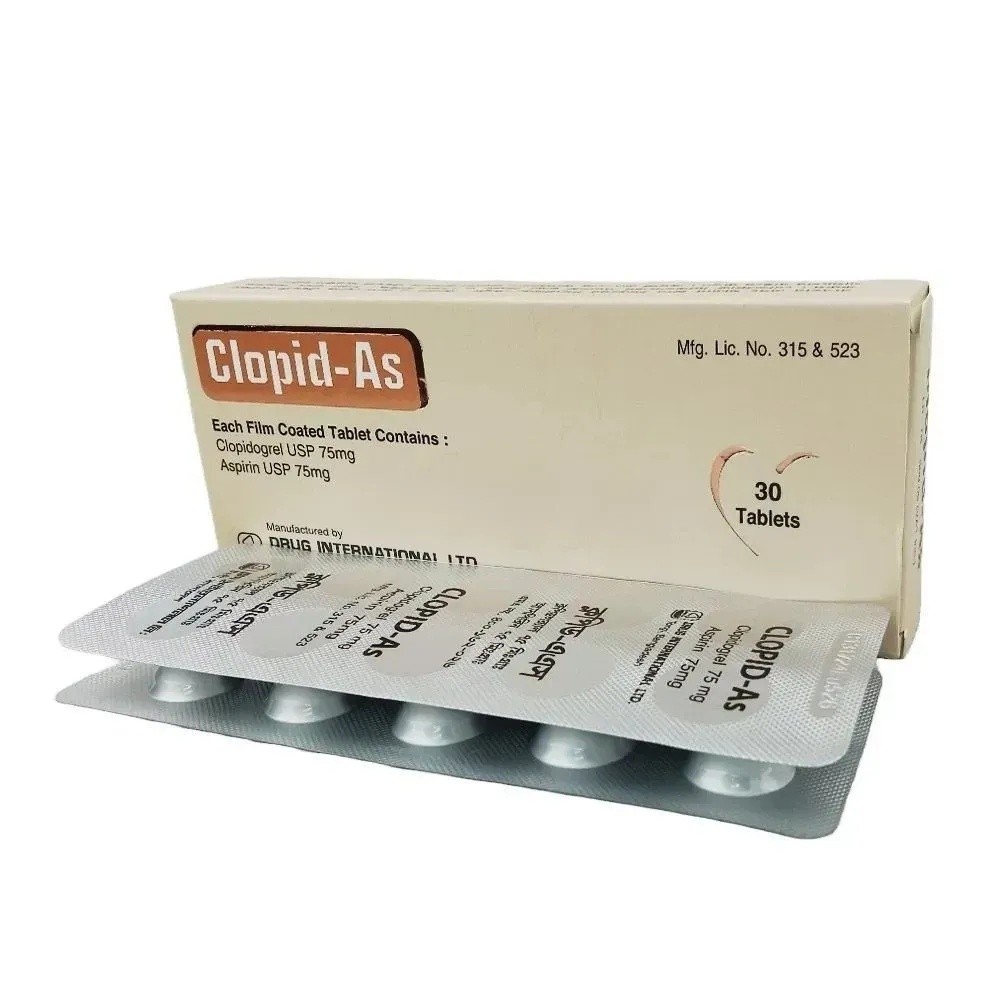
Active Ingredients: Clopidogrel (75mg) + Aspirin (75mg).
What it does: This is a powerful, fixed-dose combination of two antiplatelet medicines (often referred to as Dual Antiplatelet Therapy, or DAPT).
Clopidogrel works by irreversibly blocking the ADP P2Y12 receptor on blood platelets, preventing them from sticking together.
Aspirin permanently blocks the COX-1 enzyme, stopping the production of thromboxane A2, another key chemical that promotes clotting.
Together, they target two separate pathway mechanisms to provide far stronger protection against blood clots than either drug can alone.
Prescribed for: Prevention of repeat heart attacks, ischemic strokes, or cardiovascular death in high-risk individuals. It is most commonly prescribed to treat Acute Coronary Syndrome (ACS) or to prevent a sudden, life-threatening clot from forming inside newly placed heart stents.
Dosage & Administration
Standard Regimen: The typical dose is 1 tablet taken once daily.
Important Rules: Take this tablet with food or a glass of milk to protect your stomach lining from aspirin-induced irritation. Try to take it at the exact same time every day.
Do Not Stop Abruptly: Never stop taking this medication unless explicitly instructed by your cardiologist. Stopping prematurely—especially if you have a coronary stent—drastically increases your risk of a sudden, fatal heart attack.
Contraindications & Warnings
Active Bleeding: Do not use if you have any active bleeding, such as a stomach ulcer, a bleeding peptic ulcer, or a recent bleeding episode in the brain (intracranial hemorrhage).
Severe Bleeding Risk: Because this combination heavily suppresses clotting, you will bleed and bruise much easier. Minor cuts will bleed longer. Be extremely careful with sharp tools, and use a soft-bristled toothbrush.
Surgeries & Dental Procedures: Make sure all doctors and dentists know you take Clopid-AS. You will likely need to stop taking it 5 to 7 days before any elective surgery to prevent dangerous bleeding.
Pregnancy & Lactation: Avoid using this drug during pregnancy, especially during the third trimester, as it can cause serious complications for the baby and increase maternal bleeding. It should also be avoided while breastfeeding.
Drug Interactions:
Avoid other pain killers (like Ibuprofen, Naproxen, or Diclofenac) unless approved by your doctor, as they greatly compound the risk of stomach ulcers and internal bleeding.
Avoid **Omeprazole** or **Esomeprazole** for acid reflux. These drugs can block the liver enzymes required to activate the clopidogrel component, making the medication much less effective. (Consult your doctor for safer alternatives like Pantoprazole).
Side Effects
Easy bruising, nosebleeds, indigestion, heartburn, or mild abdominal discomfort.
Warning Signs: Stop taking this medication and seek emergency medical care immediately if you experience:
Black, tarry, or bloody stools (signs of stomach bleeding).
Vomiting blood or coffee-ground-like material.
Sudden weakness, numbness, difficulty speaking, or severe headache (signs of a stroke/brain bleed).
Unexplained fever, severe fatigue, pale skin, or tiny purple spots under the skin (signs of a rare, serious blood condition called TTP).